

What Happens If a Hernia Is Left Untreated?
A hernia may initially appear as a small, painless bulge in the abdomen or groin. Because the discomfort can be mild, some people choose to ignore it. But What Happens If a Hernia Is Left Untreated? depends on its type, size, location, symptoms, and overall health. While some hernias may be monitored when they cause no symptoms, a hernia does not generally repair itself. Some can gradually become larger or lead to complications.
For patients experiencing a persistent lump, pain, heaviness, or discomfort, an evaluation by a qualified surgeon can help determine whether observation or surgical treatment is appropriate.
Can a Hernia Get Worse If It Is Not Treated?
Yes, a hernia can become larger over time. A hernia develops when tissue pushes through a weakened area of the abdominal wall. Activities that increase pressure inside the abdomen, such as coughing, straining during bowel movements, or heavy lifting, may make the bulge more noticeable.
Some people may have very few symptoms in the beginning. However, as the hernia increases in size, it may cause discomfort during walking, bending, coughing, exercise, or other everyday activities. Inguinal hernias, for example, can enlarge and may extend toward the scrotum in men.
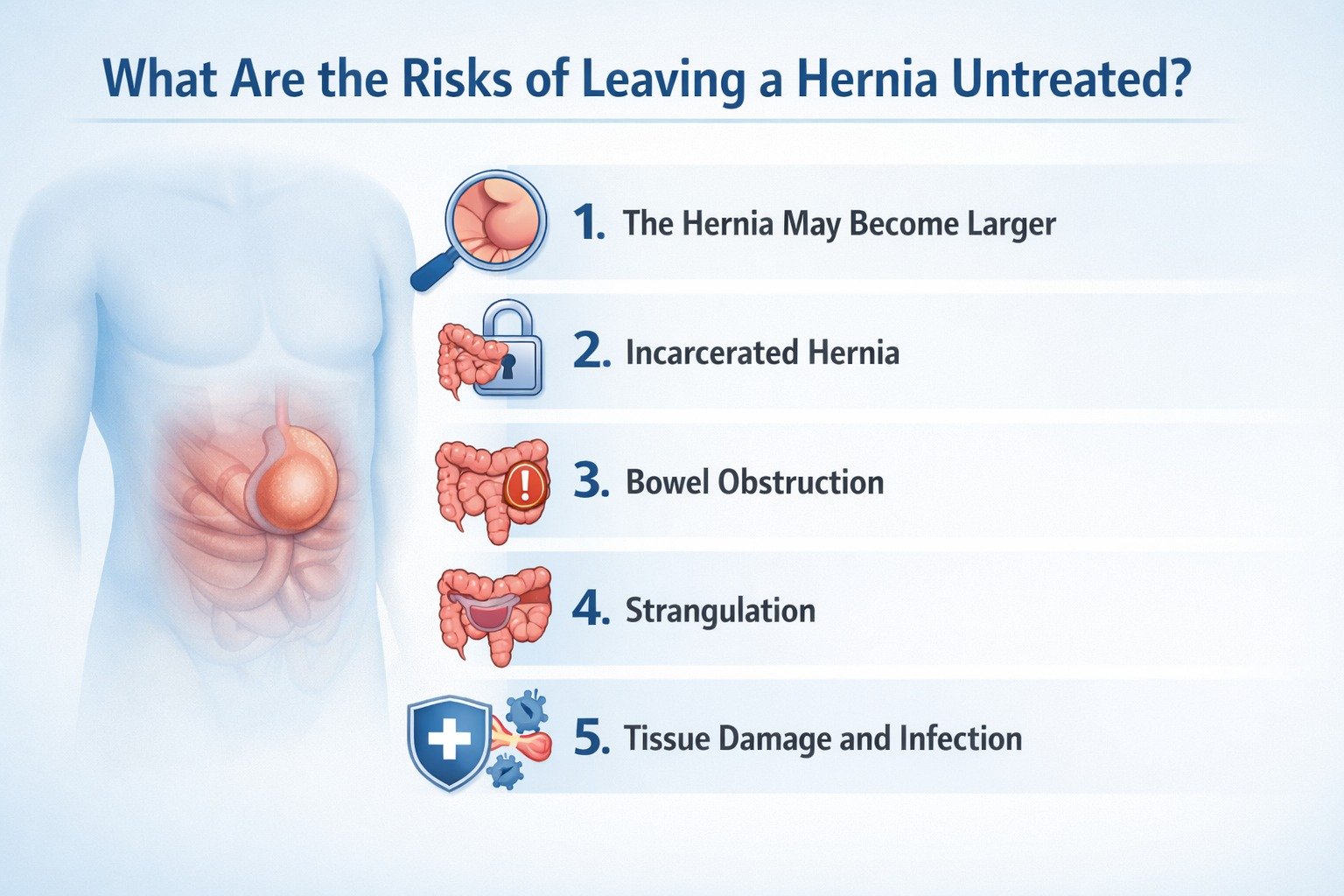
What Are the Risks of Leaving a Hernia Untreated?
Leaving a hernia without appropriate medical assessment can increase the possibility of complications. These complications do not happen in every patient, but knowing the warning signs is important.
1. The Hernia May Become Larger
One of the common concerns is gradual enlargement. A small bulge may become more prominent and uncomfortable over time. Larger hernias can also interfere with normal physical activities and may become more difficult to manage.
If you notice that your hernia is increasing in size or becoming painful, consult a doctor rather than continuing to ignore it.
2. Incarcerated Hernia
An incarcerated hernia occurs when the tissue that has pushed through the abdominal wall becomes trapped and cannot be pushed back into the abdomen.
This can cause persistent discomfort and may sometimes affect the movement of bowel contents. Medical assessment is important because an incarcerated hernia can progress to a more serious complication called strangulation.
3. Bowel Obstruction
If part of the intestine becomes trapped inside a hernia, it can sometimes cause a bowel obstruction. Symptoms may include abdominal pain or cramping, vomiting, constipation, abdominal swelling, and difficulty passing stool or gas.
A bowel obstruction should not be ignored because prolonged obstruction can damage the intestine and cause serious complications.
4. Strangulation
Strangulation is one of the most serious complications of a hernia. It occurs when the blood supply to trapped tissue is reduced or completely cut off.
A strangulated hernia can cause sudden or worsening pain, nausea, vomiting, fever, and a bulge that may become red, purple, or dark. It is a medical emergency and requires immediate treatment.
5. Tissue Damage and Infection
When blood flow to trapped bowel tissue is interrupted, the affected tissue can become damaged or die. In severe cases, this can lead to intestinal perforation and infection inside the abdomen, which can become life-threatening.
This is why sudden changes in a previously known hernia should always be taken seriously.
When Should You See a Hernia Doctor?
You should arrange a medical evaluation if you notice a new or persistent lump in the abdomen or groin, especially if it becomes painful, grows in size, or affects your daily activities.
A Hernia Doctor in Thane can examine the affected area and determine whether further tests or treatment are required. Diagnosis is often based on a physical examination, although ultrasound, CT, or other imaging may sometimes be recommended when the diagnosis is unclear
Do not wait for severe symptoms before seeking professional advice. Early evaluation can help identify the type of hernia and determine the safest treatment approach.
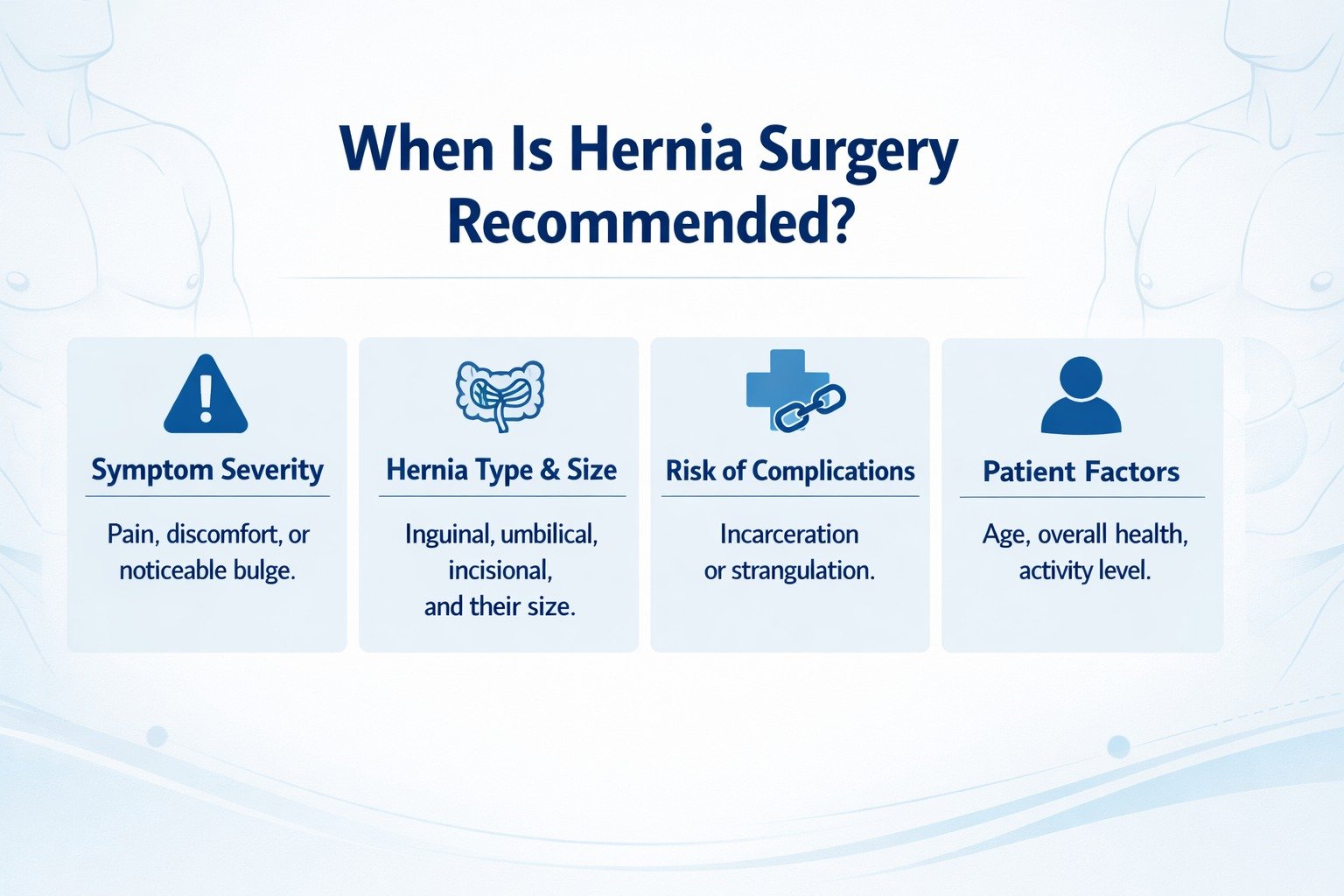
When Is Hernia Surgery Recommended?
Treatment depends on the type of hernia, symptoms, size, location, and the patient’s overall health. Some small hernias that are not causing symptoms may be monitored under medical guidance. However, painful, enlarging, or complicated hernias may require surgical repair.
A Hernia Specialist in Thane can assess your condition and discuss whether surgery is appropriate for you.
For suitable patients, laparoscopic or keyhole surgery may be considered. During laparoscopic hernia repair, the surgeon uses small incisions and a camera to access and repair the hernia. The exact surgical approach depends on factors such as the hernia type, size, previous surgeries, and general health.
How Can Laparoscopic Hernia Surgery Help?
Laparoscopic Hernia Surgery in Thane may be an option for selected patients who require surgical repair. Compared with traditional open surgery, laparoscopic repair uses several smaller cuts to access the affected area.
The surgeon places the displaced tissue back into its appropriate position and strengthens the weakened area, often using surgical mesh where appropriate. The procedure and recovery plan are individualized according to the patient’s condition.
Patients considering surgery should discuss the potential benefits, risks, recovery period, and suitable surgical technique with their surgeon.
Why Choose an Experienced Hernia Surgeon?
Choosing an experienced Hernia Surgeon in Thane can help ensure that your condition is properly assessed and that treatment recommendations are based on your individual needs.
Patients looking for the Best Laparoscopic Hernia Surgeon in Thane should consider factors such as surgical experience, the type of hernia being treated, available treatment options, hospital facilities, and the surgeon’s approach to patient care rather than relying only on online rankings.
Dr. Sunil Bangera provides laparoscopic surgical care for patients requiring evaluation and treatment of hernia-related conditions. Patients can discuss their symptoms and treatment options during a consultation.
When Is a Hernia an Emergency?
Seek urgent medical attention if a hernia suddenly becomes very painful, swollen, hard, or changes colour. Other warning signs include nausea, vomiting, fever, severe abdominal pain, abdominal swelling, or inability to pass stool or gas. These symptoms can indicate incarceration, bowel obstruction, or strangulation.
Do not attempt to manage severe symptoms at home or delay emergency care.
Laparoscopic Surgery Care in Kalwa
Patients looking for laparoscopic surgical consultation can learn more about Laparoscopic Surgery Kalwa and available surgical services through Dr. Sunil Bangera’s website.
For location information and directions to the clinic, patients can also check the Laparoscopic Doctor Kalwa location on Google Maps.
Conclusion
So, What Happens If a Hernia Is Left Untreated? It may remain stable in some people, but it can also gradually enlarge, become painful, or develop complications such as incarceration, bowel obstruction, or strangulation. Because the course of a hernia varies from person to person, ignoring a persistent bulge is not recommended.
If you have a suspected or diagnosed hernia, consult a qualified Hernia Surgeon in Thane for an appropriate evaluation. Early assessment can help you understand your condition and whether monitoring, lifestyle measures, or surgical repair is appropriate.