
What Happens to Your Body During the First 24 Hours After Surgery?
The first 24 hours after surgery are important for recovery. During this time, your body begins healing, adjusts after anaesthesia, and responds to the changes caused by the procedure. You may feel sleepy, tired, or slightly uncomfortable, depending on the type of surgery and your overall health. Knowing what to expect can help you feel more prepared and follow your doctor’s instructions with confidence.
If you are planning a procedure, consulting an experienced Laparoscopic Surgeon in Thane can help you understand the surgery, possible side effects, and the steps needed for a safe recovery. Dr Sunil Bangera provides surgical consultation for patients who want to learn more about laparoscopic procedures and post-surgery care.
What Happens to Your Body Immediately After Surgery?
After surgery, you are usually moved to a recovery room, where the medical team monitors your condition. Your body needs time to recover from the effects of anaesthesia and the surgical procedure.
During this stage, healthcare professionals may check your blood pressure, heart rate, breathing, oxygen levels, and pain.
The exact recovery process depends on the type of surgery, the duration of the procedure, your medical history, and whether the surgery was planned or performed as an emergency.
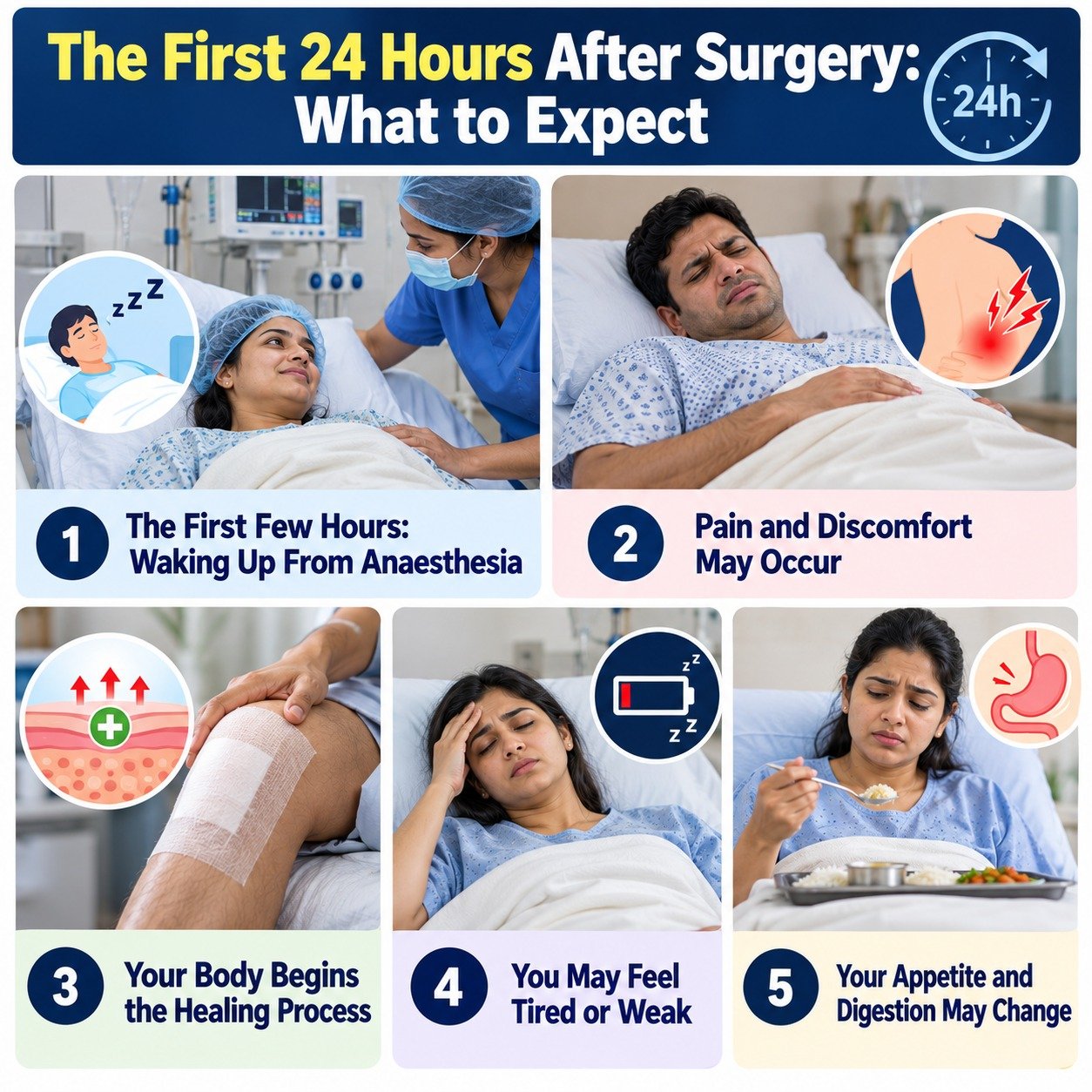
The First 24 Hours After Surgery: What to Expect
1. The First Few Hours: Waking Up From Anaesthesia
After the procedure, you may feel sleepy, confused, or slightly dizzy as the effects of anaesthesia wear off. Some patients may also experience nausea, a dry mouth, or temporary shivering.
These effects are often short-lived, but their duration varies from person to person.
During this period, your medical team will monitor your recovery and provide medicines or fluids when needed. You should not try to stand up or walk without assistance until your healthcare team confirms that it is safe.
2. Pain and Discomfort May Occur
Some pain or discomfort is common after surgery. The level of pain depends on the procedure, the surgical site, and your individual pain tolerance.
You may notice soreness around the incision, tenderness, or discomfort while changing positions. After laparoscopic procedures, some patients also experience bloating or shoulder-tip pain due to the gas used during surgery.
Your doctor may prescribe pain-relief medicines to manage these symptoms. Take them according to the instructions provided, and inform your medical team if the pain becomes severe or does not improve.
3. Your Body Begins the Healing Process
Your body starts repairing tissues soon after surgery. Blood cells and other healing mechanisms work together to protect the surgical area and support tissue repair.
You may notice mild swelling, tenderness, or bruising around the incision. These symptoms can occur as part of normal healing, although the expected changes depend on the procedure.
Keeping the wound clean and following your surgeon’s instructions can help reduce the risk of infection. Avoid touching the incision unnecessarily, and do not apply creams or home remedies unless your doctor recommends them.
4. You May Feel Tired or Weak
Feeling tired during the first 24 hours is common. Your body has experienced physical stress, and anaesthesia, medicines, limited food intake, and disrupted sleep may contribute to fatigue.
You may need more rest than usual. However, complete bed rest is not always necessary. When your doctor allows it, gentle movement and short walks can help support circulation and reduce the risk of certain complications.
Avoid heavy lifting, strenuous exercise, driving, and activities that require full concentration until your medical team confirms that they are safe.
5. Your Appetite and Digestion May Change
After surgery, you may not feel hungry immediately. Anaesthesia and certain medicines can temporarily affect digestion, leading to nausea, bloating, or constipation.
Your doctor will advise you when to start drinking fluids and eating food. Depending on the procedure and your recovery, you may begin with small amounts of water and gradually return to your usual diet.
Once eating is permitted, choose foods that are easy to digest and include enough protein, fruits, vegetables, and fluids as advised by your healthcare team.
Do not force yourself to eat large meals if you feel nauseated. Contact your doctor if you have persistent vomiting, worsening abdominal swelling, or difficulty keeping fluids down.
What Happens After Laparoscopic Surgery?
Laparoscopic surgery is a minimally invasive surgical technique that uses small incisions and a camera to help the surgeon perform the procedure. Compared with some open surgeries, it may offer smaller wounds and a shorter recovery period, depending on the condition being treated.
During the first 24 hours after laparoscopic surgery, you may experience:
- Mild pain around the incision sites.
- Bloating or a feeling of fullness in the abdomen.
- Temporary shoulder discomfort caused by the gas used during the procedure.
- Tiredness or mild nausea.
- Difficulty moving comfortably during the first few hours.
Your surgeon will guide you on walking, eating, wound care, medicines, and when you can return home. Some patients can leave the hospital on the same day, while others require overnight observation or a longer stay.
If you are considering Laparoscopic Surgery in Thane discuss the benefits, risks, recovery time, and suitable treatment options with your surgeon before making a decision.
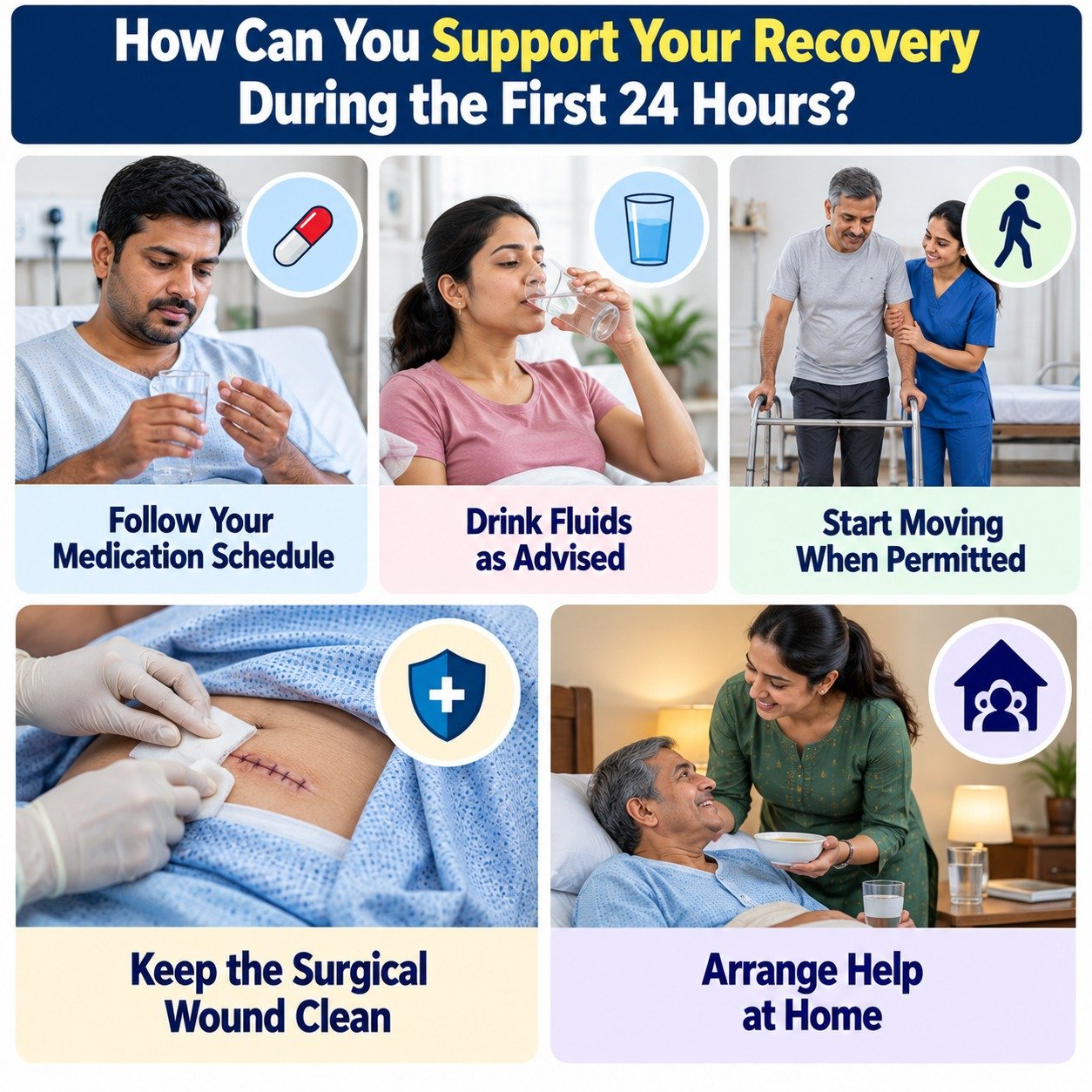
How Can You Support Your Recovery During the First 24 Hours?
Following medical advice is one of the most important steps towards a smooth recovery. Here are some practical measures that may help.
Follow Your Medication Schedule
Take prescribed medicines at the recommended times. Do not change the dose or take additional painkillers without consulting your doctor.
Drink Fluids as Advised
Adequate hydration supports normal body functions. However, some procedures require specific restrictions on drinking, so follow your medical team’s instructions.
Start Moving When Permitted
If your doctor allows it, try sitting up and taking short, assisted walks. Gentle movement can support blood circulation and help you regain confidence after surgery.
Keep the Surgical Wound Clean
Follow the wound-care instructions provided by your healthcare team. Ask when you can bathe, how to change the dressing, and which symptoms may indicate an infection.
Arrange Help at Home
You may feel sleepy or weak after returning home. Ask a family member or trusted person to assist you, especially if you have undergone general anaesthesia or received medicines that affect alertness.
When Should You Contact Your Doctor After Surgery?
Although some discomfort is expected, certain symptoms need immediate medical attention.
Contact your surgical team urgently if you experience:
- Severe or rapidly increasing pain.
- Heavy bleeding or bleeding that does not stop.
- Increasing redness, swelling, or discharge around the wound.
- Persistent vomiting or an inability to keep fluids down.
- Fever or chills, particularly when accompanied by worsening symptoms.
- Difficulty passing urine or a significant reduction in urine output.
Seek emergency medical care if you develop difficulty breathing, chest pain, fainting, or sudden severe weakness. Do not wait for your next scheduled appointment if these symptoms occur.
How to Choose the Right Surgeon in Thane
Choosing a surgeon involves more than comparing names or prices. Look for appropriate qualifications, relevant surgical experience, clear communication, and access to suitable hospital facilities.
A consultation with a Best Laparoscopic Surgeon in Thane can help you understand whether a minimally invasive procedure is appropriate for your condition. Ask about the expected recovery period, possible complications, follow-up appointments, and the support available after discharge.
You can also discuss the Laparoscopic Surgery cost in Thane during your consultation. The total cost may depend on the type of procedure, hospital charges, anaesthesia, investigations, medicines, length of stay, and follow-up care.
If you are looking for a Laparoscopic Doctor in Thane make sure you understand your diagnosis and the available treatment options before proceeding with surgery.
Consult Dr Sunil Bangera for Surgical Guidance
Understanding what happens to your body after surgery can help reduce uncertainty and prepare you for recovery. Every patient is different, so your recovery plan should be based on your procedure, medical history, and your surgeon’s advice.
For consultation regarding laparoscopic procedures, you can learn more about Laparoscopic Surgery in Kalwa You can also find the clinic location using Google Maps directions for the Kalwa consultation location Laparoscopic Doctor Kalwa
Speak with Dr Sunil Bangera about your symptoms, treatment choices, preparation, and post-operative care to understand the next steps suitable for your condition.
Conclusion
The first 24 hours after surgery involve waking up from anaesthesia, managing discomfort, beginning the healing process, and gradually returning to basic activities. Rest, appropriate hydration, prescribed medicines, wound care, and gentle movement when permitted can support recovery.
Most importantly, follow your surgeon’s instructions and report any warning signs without delay. If you are planning a laparoscopic procedure, consult Dr Sunil Bangera to discuss the procedure, expected recovery, and the care you may need after surgery.